

Load dynamics
Machines, tool cooling and thermal processes generate loads that change quickly. The system must control stably at full load and part load, even when lines start up and shut down.
Planning, plant engineering and service from a single source
KSI Kältetechnik plans and builds systems for industrial cooling: central refrigeration, chillers and cooling water networks that supply machines, tools and production processes with the process cooling they need. With natural refrigerants, designed with redundancy and matched to the load profile of production.
We take on the new construction of the plant room, the expansion as production grows and the Modernisation of existing systems. For Uponor in Zella-Mehlis, we built a central cooling and heating plant without halting plastics production.
Process cooling is more than cooling capacity. What matters is how precisely the system holds temperatures when machines start up and shut down, and how much of the extracted heat can be reused. That is why we prefer to be involved from the design stage.
Four requirements
Machines, tool cooling and thermal processes generate loads that change quickly. The system must control stably at full load and part load, even when lines start up and shut down.
Any deviation in temperature management can affect product quality, cycle times or component accuracy. What counts is how tightly the system holds the supply temperature over long periods.
If the cooling stops, production often stops too. Redundant pumps and chillers and a concept for maintenance during operation are therefore part of the design from the start.
Process cooling often runs around the clock. Free cooling, heat recovery and controls that follow actual demand determine the operating costs.
What we use for this
Industrial cooling covers very different tasks, from cooling individual machines to the central cooling supply of an entire plant. We plan them as one overall system of generation, distribution and control.
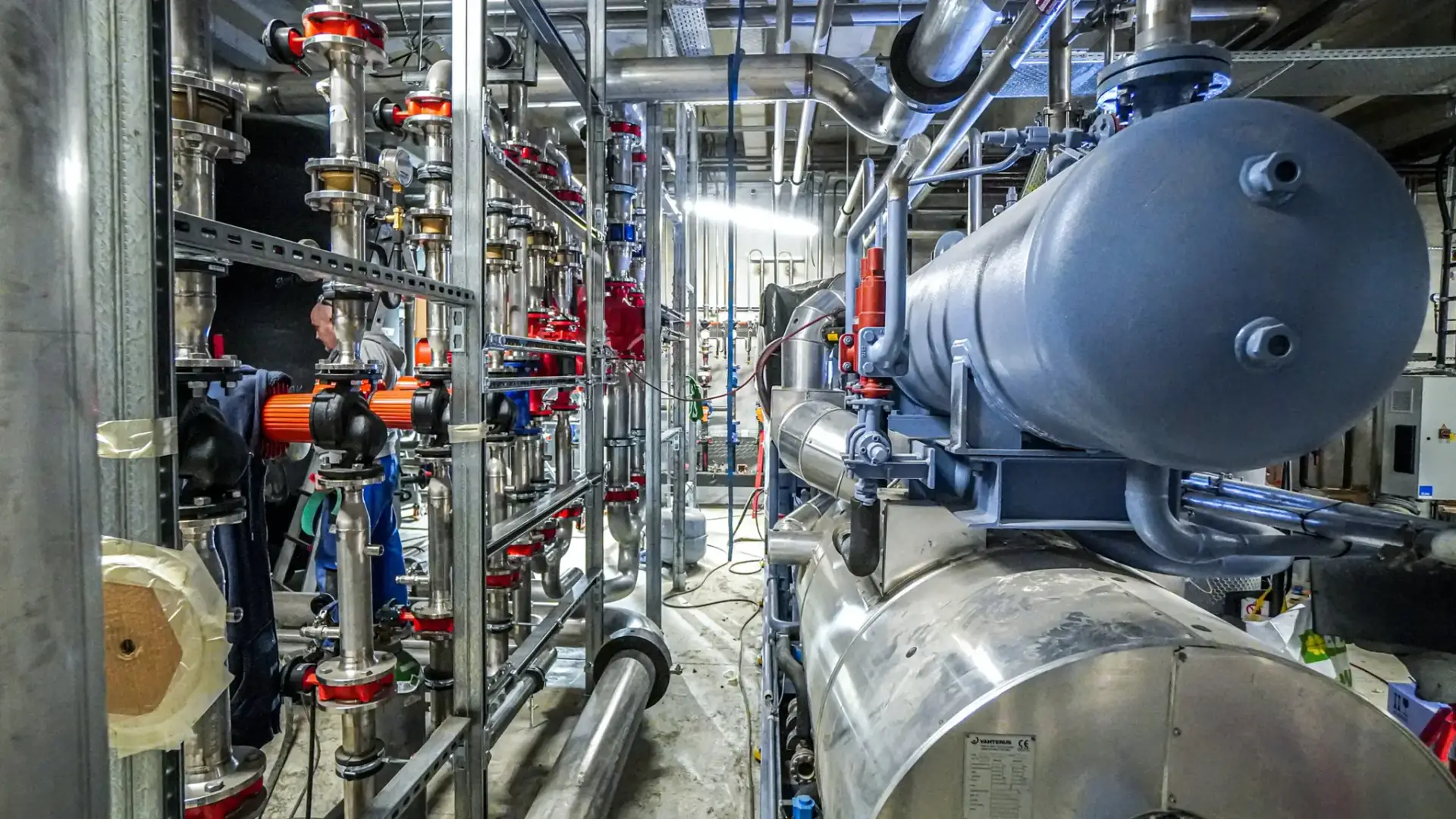
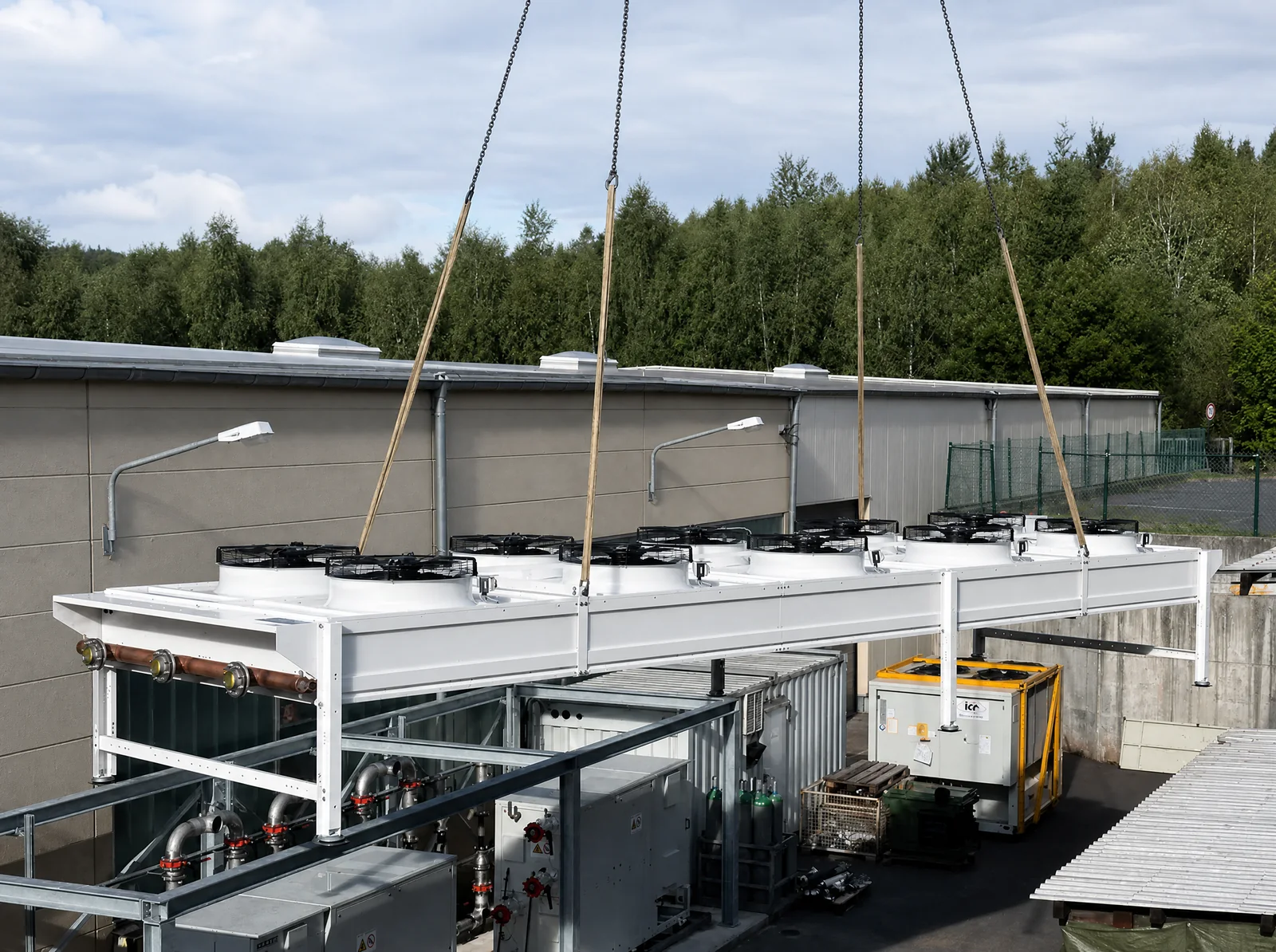
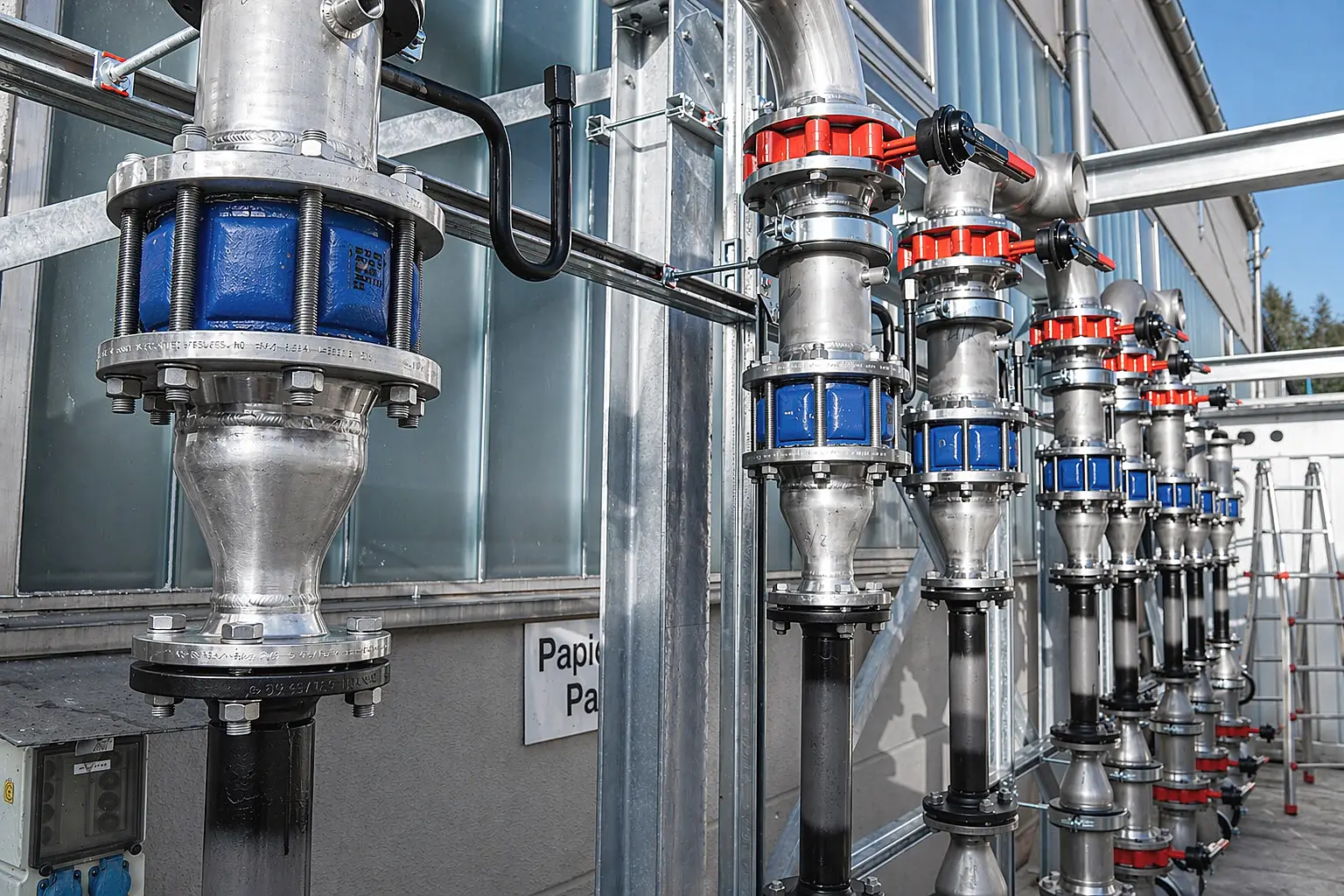
Chillers, dry coolers, pumps and hydraulics designed as one system and matched to the temperature levels of the consumers. At this scale, the system structure determines energy consumption.
Cooling water at the temperature and volume that machines and tools need, from a central network instead of many individual units. This reduces maintenance effort and power consumption.
At low outdoor temperatures, the outside air takes over part of the work. The higher the required supply temperature, the more hours per year the compressor runs less or not at all.
The heat from cooling can be used for heating and process heat. At Uponor, the cold and warm sides of the heat pump work simultaneously: the system cools and heats in one.
Propane (R290), ammonia (NH₃) and CO₂ instead of synthetic refrigerants, which the F-Gas Regulation is gradually restricting. This secures operation and service over the entire service life of the system.
The new plant room is built alongside the existing one, and the switchover only happens afterwards. This keeps production running during construction.
From practice
For Uponor's plastics production in Zella-Mehlis, KSI built a central cooling and heating plant for the production processes, alongside ongoing production and without downtime.
Another example: for TÜV SÜD Industrieservice in Munich, we modernised the cold and warm brine system for testing and industrial applications, with 2 MW of cooling capacity. To the TÜV SÜD reference
To the Uponor referenceSo you know whether we are a good fit for each other
We work where the cooling supply of a production facility is solved centrally: a dedicated plant room, a chilled water or brine network, several consumers and requirements for redundancy and efficiency. Typically in the three- to four-digit kilowatt range.
You can get a single process chiller for one machine directly from the manufacturer. As soon as several consumers, a cooling water network or heat recovery come into play, it is worth talking to us.
Further reading
How we develop a sound concept from operating data, load profiles and temperature levels is described on our planning page. Which natural refrigerant suits which application is shown in our overview.
We look at the load profile, temperature levels and existing system and develop a concept that fits your production, with sound assumptions on free cooling, heat recovery and redundancy.
More from KSI Kältetechnik
Thank you. We will get back to you soon.