

Availability
The refrigeration supply runs continuously. What matters is that the permissible operating conditions of the IT are met at all times – including during maintenance, load changes and in the event of a fault.
Planning, plant engineering and service from a single source
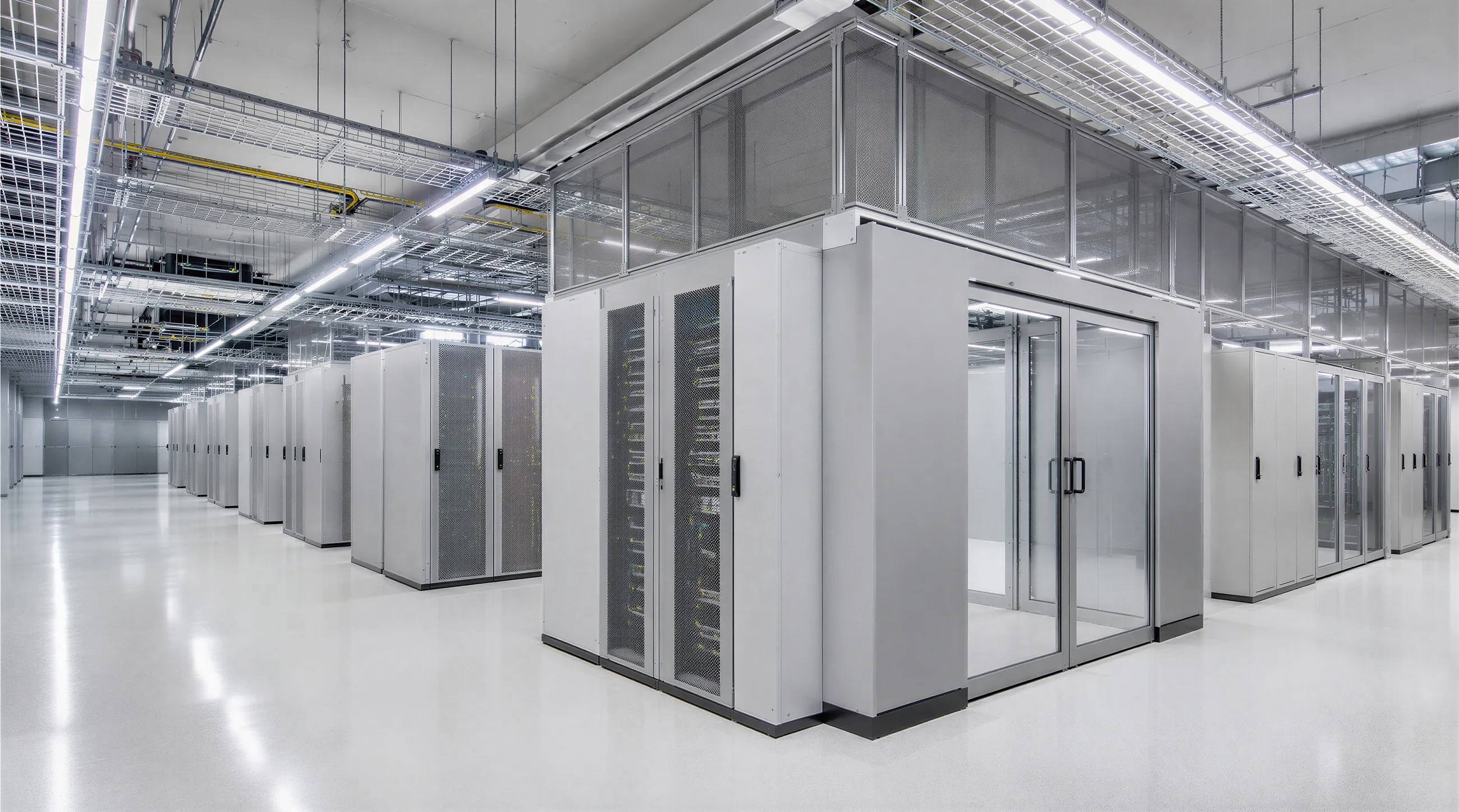
KSI Kältetechnik builds central refrigeration systems for data centres – in the megawatt range, with natural refrigerants, designed for redundancy and continuous operation. From the initial design through plant engineering to maintenance with 24/7 standby.
We take on the new build of the chiller plant, the next expansion phase during ongoing operation and the energy-related refurbishment of existing systems. At the Munich site, we refurbished the central cooling system of a data centre without shutting down the IT infrastructure.
The decisions that shape operation over the entire lifespan of the system are made early: during the chilled water temperature, during the free cooling concept, during the redundancy structure and during the Refrigerant. That's why we prefer to be at the table as early as the concept phase.
Four requirements
The refrigeration supply runs continuously. What matters is that the permissible operating conditions of the IT are met at all times – including during maintenance, load changes and in the event of a fault.
It only exists once it is consistent throughout: across chillers, pumps, hydraulics and control. A second chiller is of little use if the distribution is built as a single string.
The share of cooling in overall power consumption becomes a figure that must be substantiated. The chilled water temperature and the free cooling concept also determine which values a site can achieve at all.
Data centres grow in expansion stages. The basic structure of generation, hydraulics and control should be able to accommodate further stages without disrupting ongoing operation.
What we use for this
In tenders, "data centre air conditioning" and "data centre cooling" are often mentioned in the same breath. For planning purposes, it is worth separating them: refrigeration generation provides chilled water, air conditioning brings this cooling to the hardware. Both sides must be coordinated with each other.

Chillers, heat rejection units, pumps and hydraulics designed as one system, with defined load zones and higher-level control. From this size upwards, it is the system structure, not the choice of equipment, that determines energy consumption.
At low outdoor temperatures, the outside air removes the heat and the compressor runs less or not at all. Control that only switches between two operating modes leaves the mixed range unused – a gradual transition along the current IT load is the sensible approach.
The heat removed can be put to use instead of being released entirely to the environment. This requires a consumer and a suitable temperature level – both need to be considered early in the design.
Propane (R290) has become established in this field: high efficiencies even at the higher flow temperatures required by free cooling and heat recovery, and no risk arising from the phase-down of synthetic refrigerants over the service life of the system.
Meters and sensors on the cooling side belong in the concept, not in a retrofit. Without them, neither optimisation nor verification is possible. Operating conditions can be viewed at any time via secure remote access.
Existing data centres can be refurbished without shutting down the IT: a new plant room is built in parallel and only integrated afterwards. This requires a transition concept that is established from the outset.
From practice
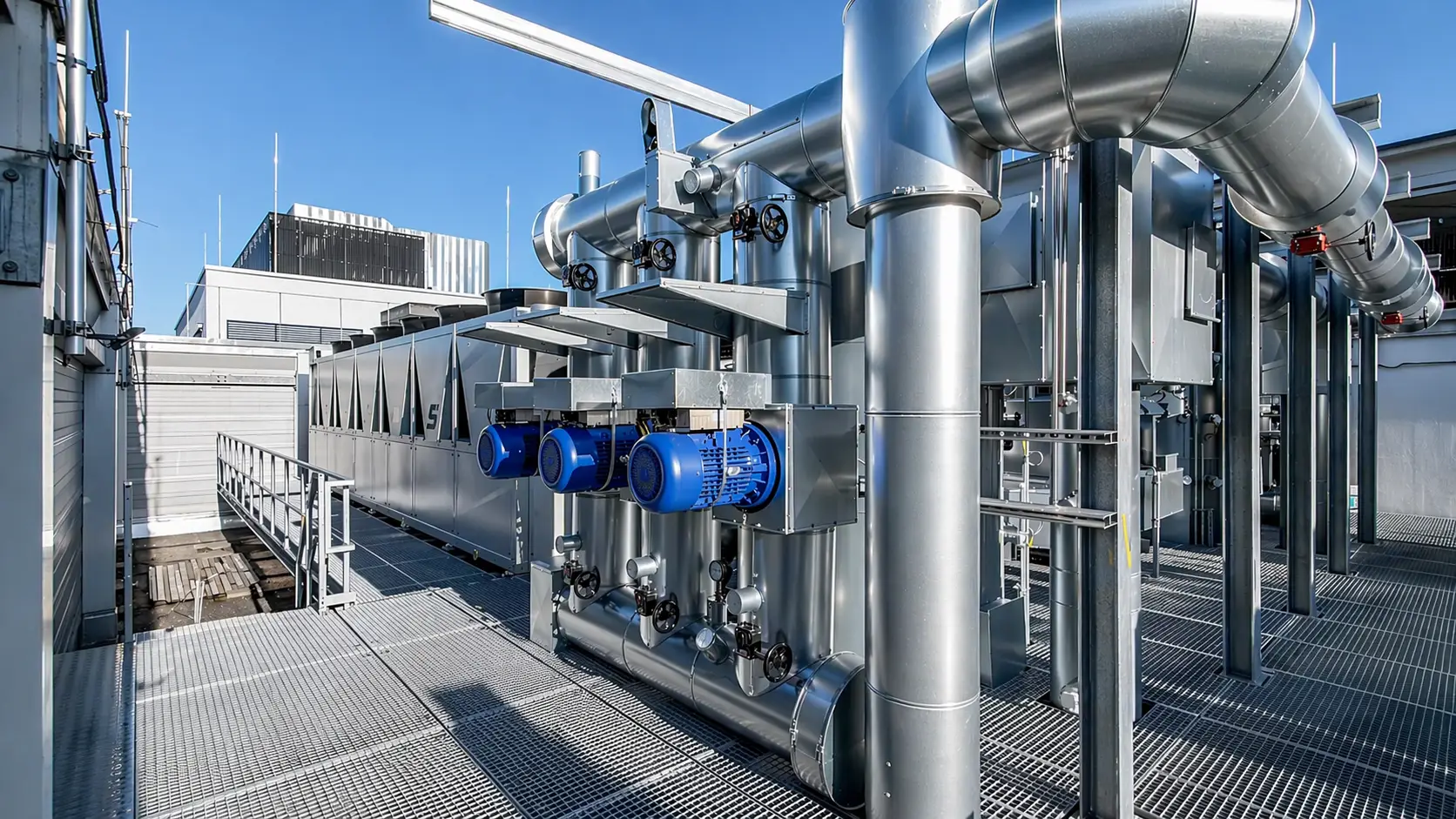
For NorthC Datacenters GmbH, KSI implemented the first expansion stage of the central cooling system at the Munich site – as an energy-related refurbishment during ongoing data centre operation, without interrupting the existing IT infrastructure.
So you know whether we are a good fit for each other
We work where a dedicated chiller plant is being built: central refrigeration generation, chilled water network, defined load zones and higher-level control. Typically in the three- to four-digit kilowatt range, with redundancy requirements and expansion phases over the years.
For a single server room with a split unit, we are the wrong partner. As soon as a chilled water network, redundancy or an efficiency requirement comes into play, we are no longer the wrong partner.
Further reading
The difference between a server room and a data centre, the role of chilled water temperature, what the Energy Efficiency Act means for refrigeration technology, and seven questions that reveal a robust design: all covered in detail in our technical article on Cooling data centres.
Read the technical articleWe look at the load profile, the existing system and site conditions, and develop a concept that suits your operation – with robust assumptions on free cooling, redundancy and efficiency.
More from KSI Kältetechnik
Thank you. We will get back to you soon.