

Tight temperature tolerances
Pharma and laboratory processes must hold temperatures very precisely, sometimes at low temperatures or with large jumps between individual process steps. Even small deviations can put product quality at risk.
Planning, plant engineering and service from a single source
KSI Kältetechnik takes on the refrigeration planning for pharma, laboratories and hospitals and then builds the system itself. From cooling generation and distribution to control, designed with redundancy and matched to the temperature zones of your processes.
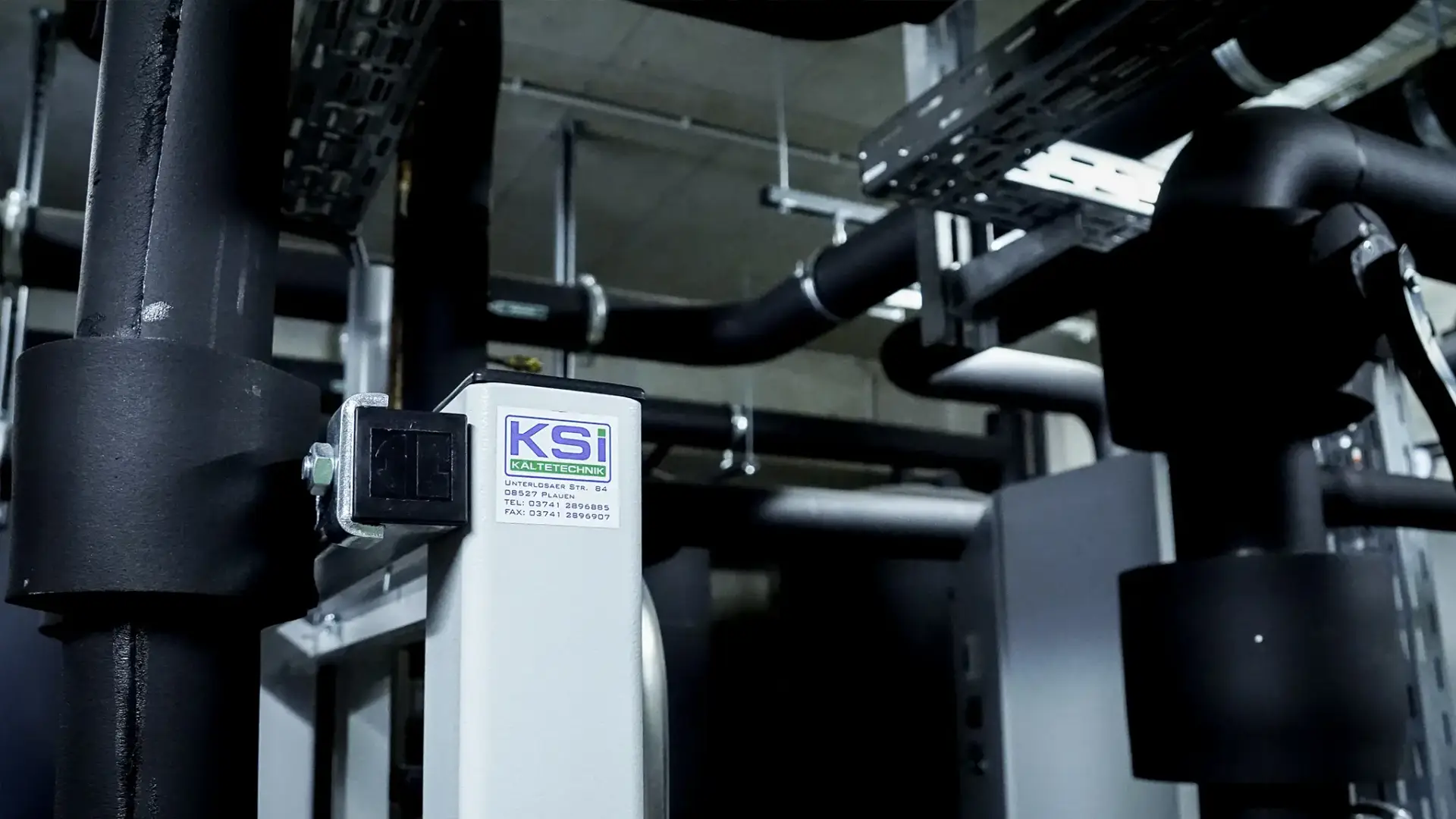
At Großhadern University Hospital in Munich, a KSI system has been supplying cooling for the production of radioactively labelled medicines since 2013, around the clock and without interruption since commissioning.
In the pharmaceutical industry, cooling capacity alone is not what counts. What matters is how precisely the system holds temperatures, how reliably it bridges faults and how completely it documents its operation. That is why we prefer to be involved from the design stage.
Four requirements
Pharma and laboratory processes must hold temperatures very precisely, sometimes at low temperatures or with large jumps between individual process steps. Even small deviations can put product quality at risk.
If the cooling fails, an entire batch is often lost. Redundant chillers and pumps, a buffer tank and reliable alarm concepts are therefore part of the design from the start.
The technology must be ready for validation and fully documented. Operating states are recorded transparently and remain traceable at all times, in line with GMP, HACCP and ISO requirements.
Pharma and laboratory areas are often located in the middle of existing buildings, with little space and operations continuing all around. The system has to fit into the available space and be installed without disrupting operations.
What we use for this
Deep-cold areas, tempered intermediate stages and sensitive production sections have to work together reliably. That is why we plan generation, distribution, control and monitoring as one overall system.
Chilled water and brine at the temperature that equipment, reactors and laboratory areas need, generated centrally and distributed to the individual temperature zones.
Two pump systems, duplicated chillers and a buffer tank that bridges short interruptions. This keeps the cooling running during maintenance or a fault.
In cleanrooms and laboratories, cooling and air conditioning influence each other. That is why we plan temperature, humidity and airflow as one system.
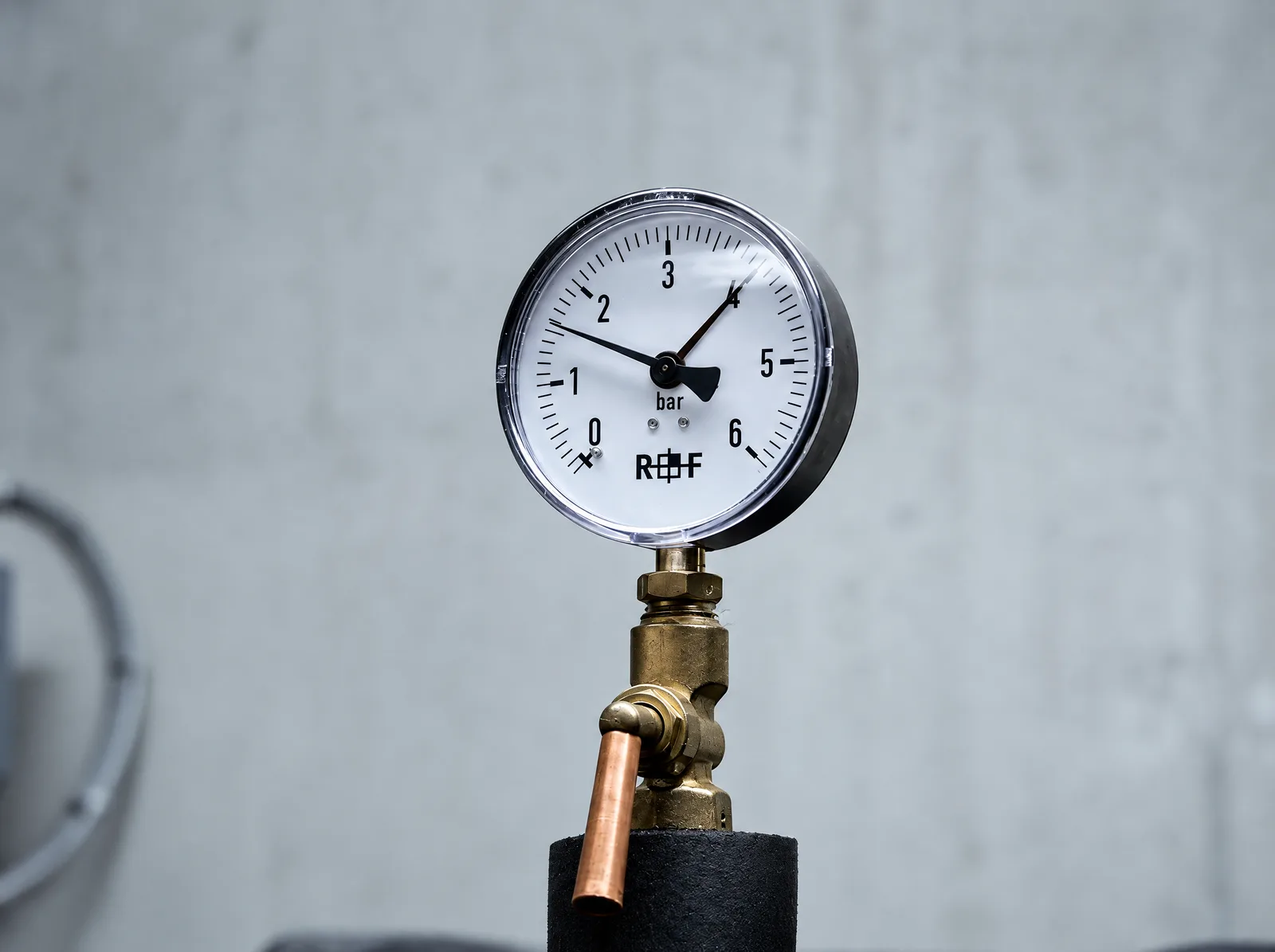
High-resolution sensors and digital monitoring record critical temperatures in real time. Deviations trigger an alarm immediately, not at the next inspection round.
For new systems we use propane (R290), ammonia (NH₃) and CO₂. The F-Gas Regulation is gradually restricting synthetic refrigerants; natural ones secure operation and service in the long term.
A fixed maintenance routine keeps the system in good condition over the long term. Technical support is available around the clock, often via remote maintenance without a site visit.
From practice
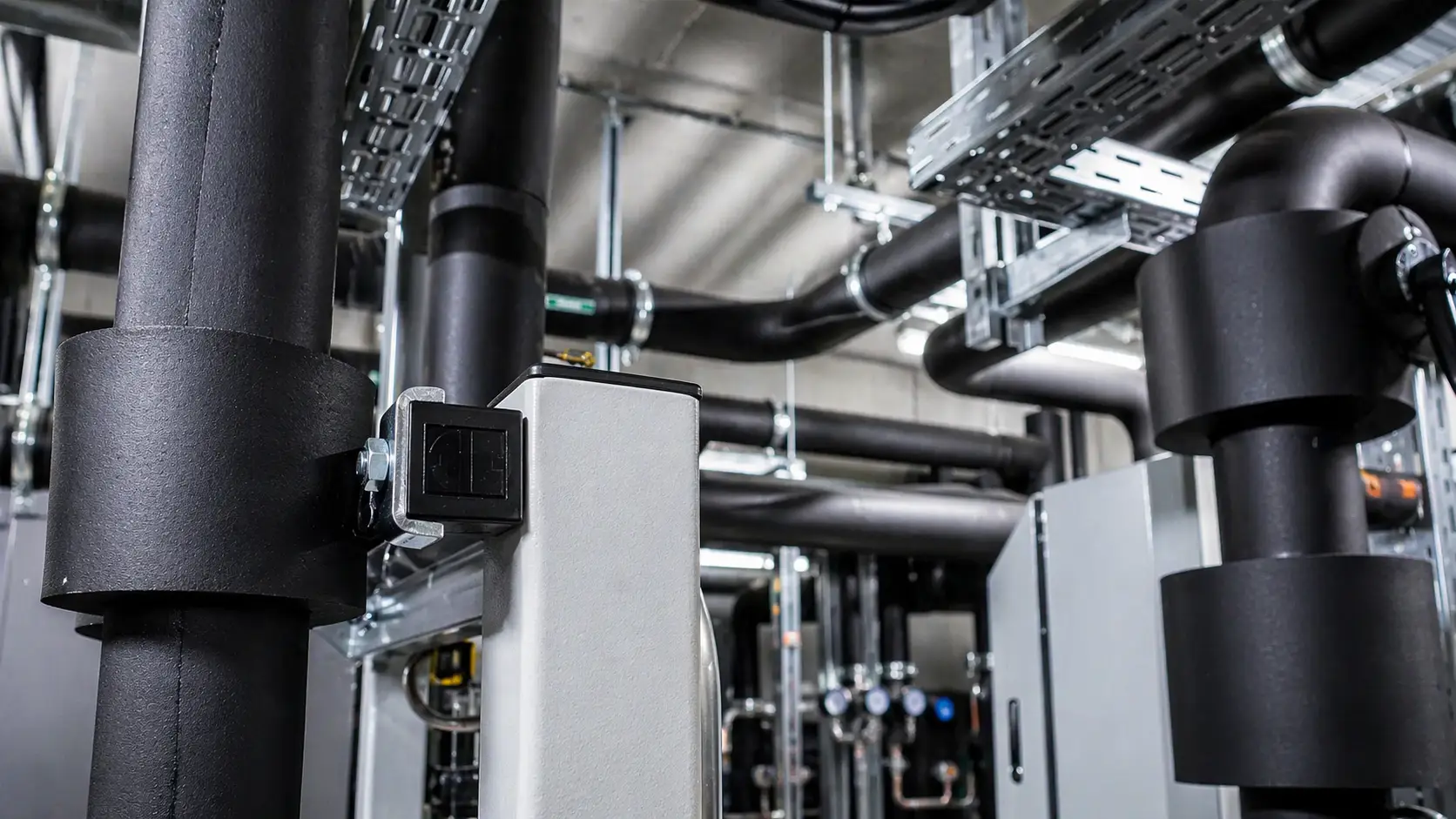
For the radiopharmaceutical production at Großhadern University Hospital, KSI designed and built a refrigeration system that continuously cools the equipment used to produce the medicines. It was installed in a confined space in the middle of the hospital building without disrupting operations.
So you know whether we are a good fit for each other
We work where cooling is supplied centrally: a dedicated plant room, a chilled-water or brine network, several consumers and high demands on redundancy and documentation. Typically in the three- to four-digit kilowatt range.
A single laboratory refrigerator or a cooling unit for one device is best bought from a specialist dealer. As soon as several areas, a chilled-water network or redundancy come into play, it is worth talking to us.
Further reading
How we develop a robust concept from operating data, temperature zones and load profiles is explained on our planning page. Which natural refrigerant suits which application is shown in our overview.
We look at temperature zones, requirements for redundancy and documentation and the existing installation, and develop a concept that suits your operation.
More from KSI Kältetechnik
Thank you. We will get back to you soon.